

Parking AI Assistant
01. THE NEED
Our client identified a critical “justice gap” in urban mobility: while nearly 30% of parking citations issued in major metropolitan areas contain procedural errors or are contestable under local bylaws, fewer than 5% are ever appealed.
The primary business obstacles included:
- The Complexity Barrier: Citizens were deterred by the fragmented nature of local laws
- Document Heterogeneity: A specific need existed for a system that could ingest and accurately interpret hundreds of different ticket formats
- Scalability of Expertise: The client needed a way to provide “legal-grade” advice across multiple jurisdictions (different cities/states)
- Information Asymmetry: Providing real-time, factual answers to user queries that are strictly grounded in current local legislation
# LegalTech # Smart City # Public Services
02. THE SOFTWARE
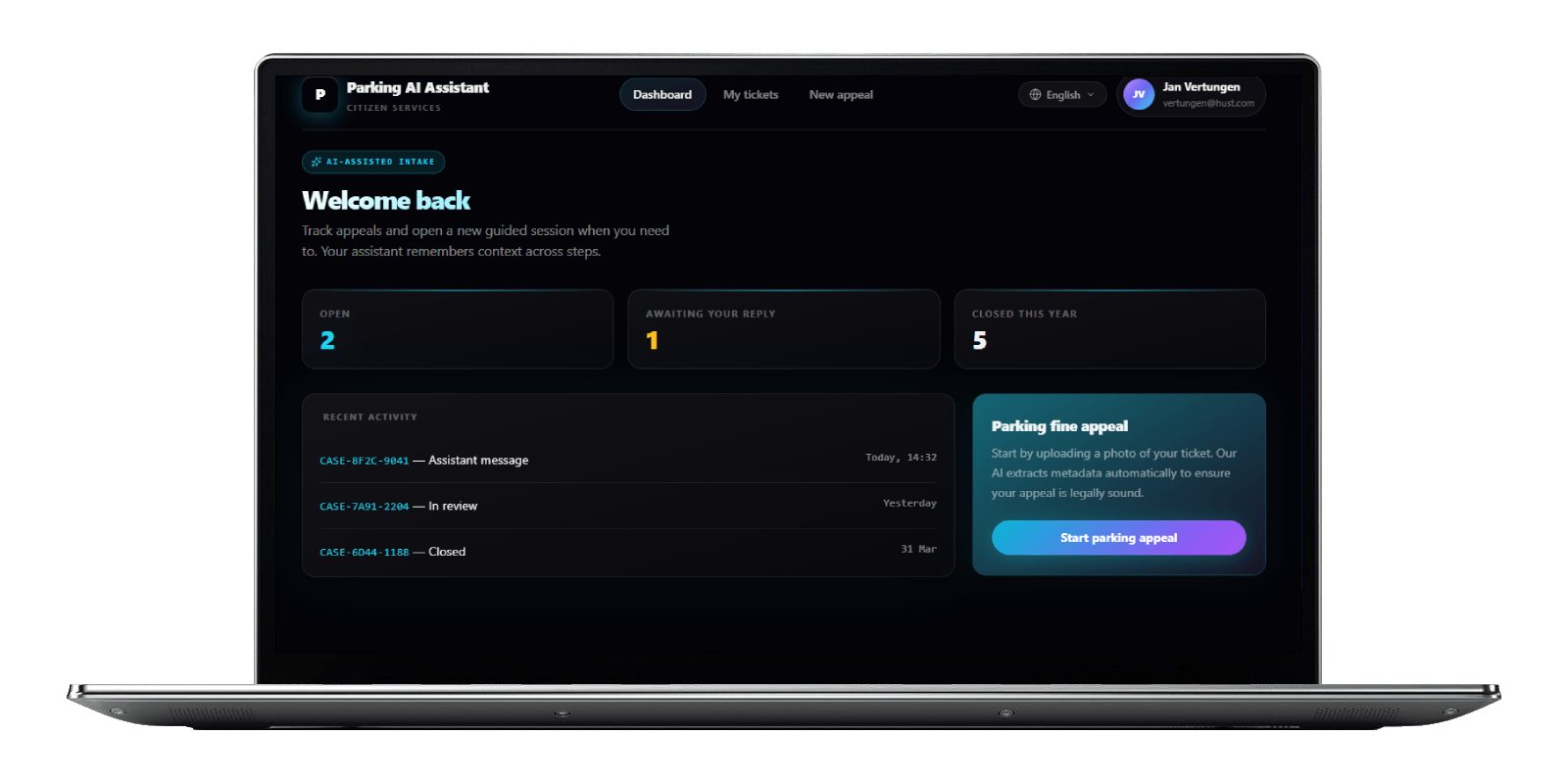
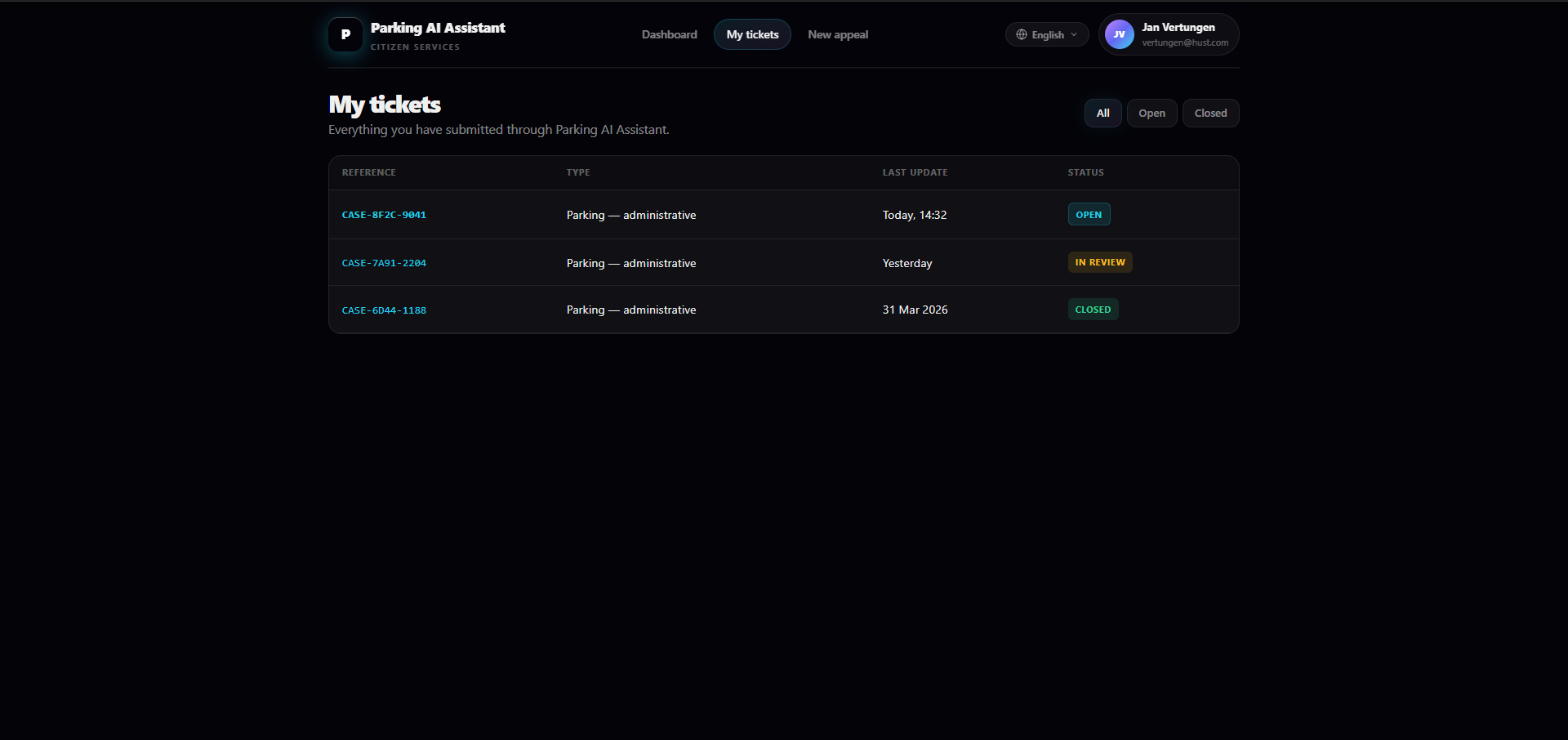
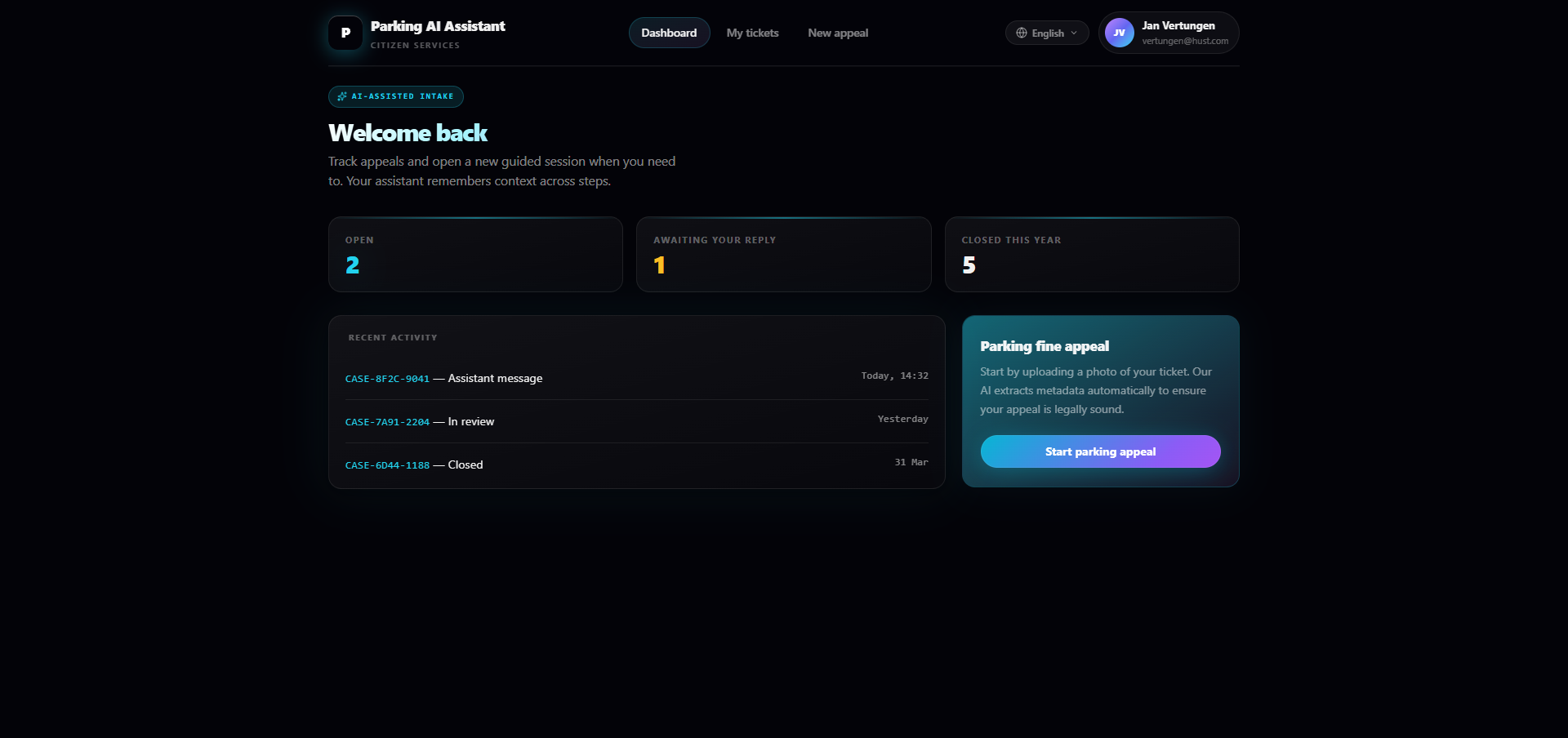
We engineered an AI ecosystem that moves beyond simple chatbots into the realm of Intelligent Legal Automation. The solution utilizes a proprietary “Context-Aware” architecture to handle the entire appeal workflow.
Vision-Based Data Extraction
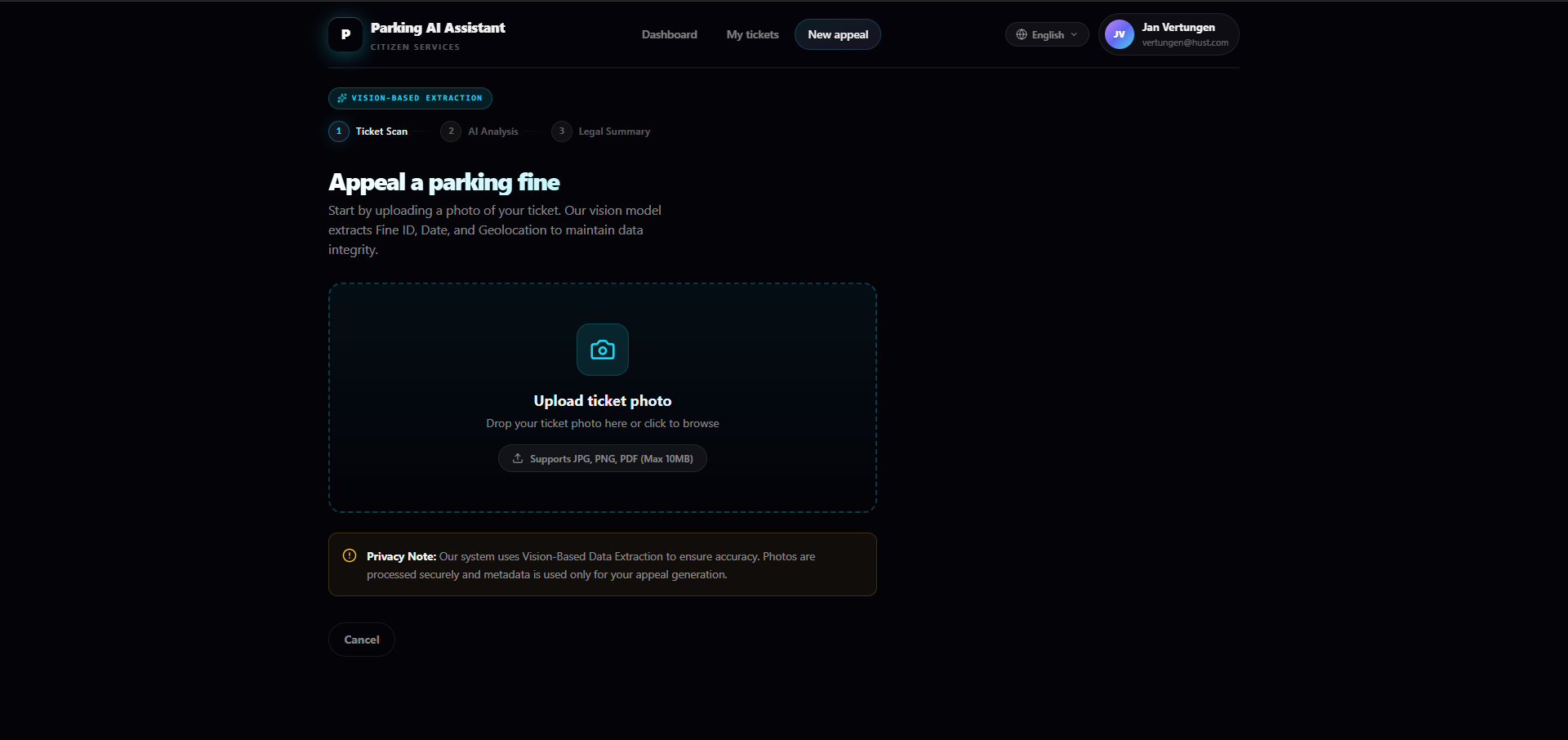
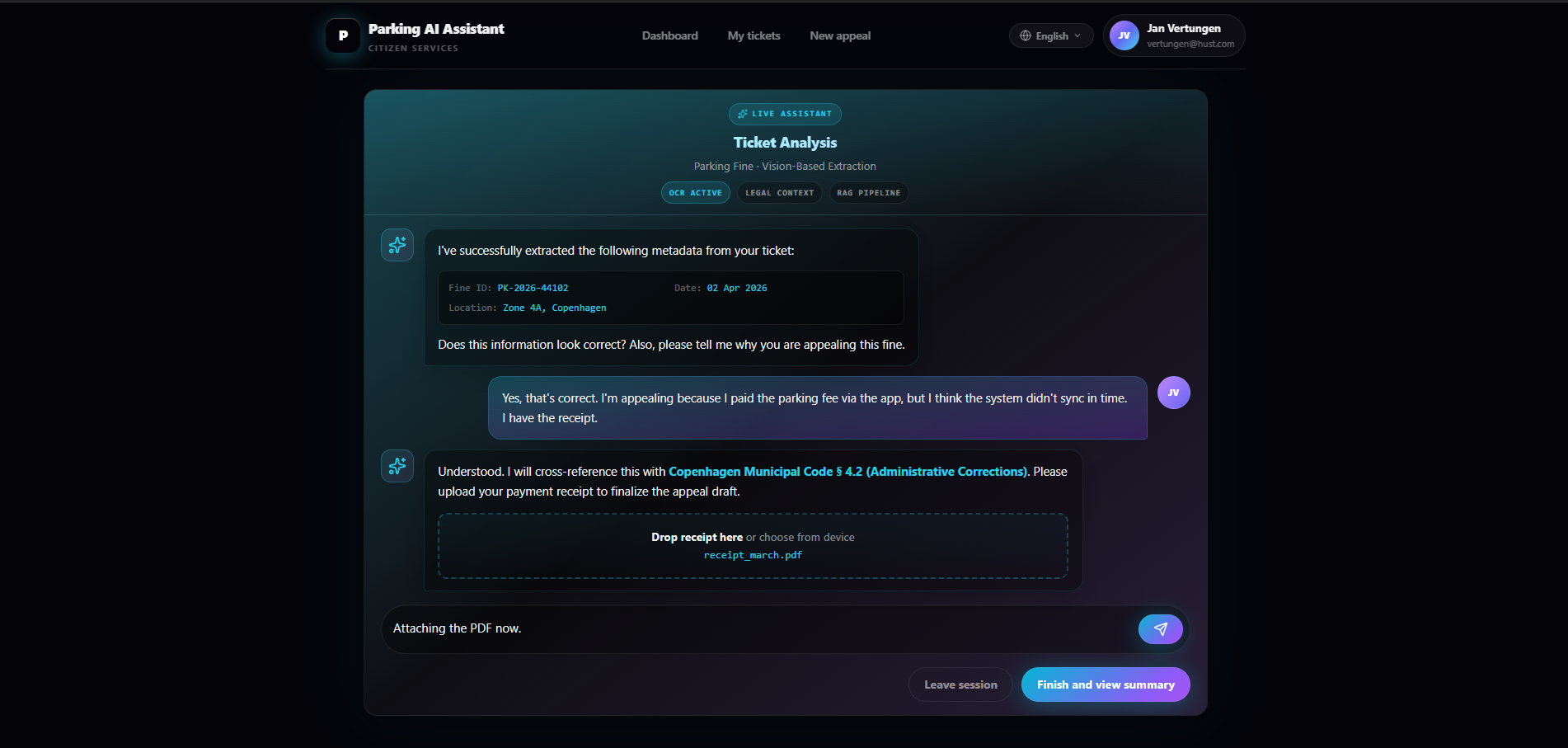
Using OpenAI’s Vision API, we developed an Intelligent Document Processing (IDP) layer. It extracts structured metadata (Fine ID, Date/Time, Geolocation, Issuing Agency) from messy smartphone photos of tickets. By implementing a Confidence Scoring System, the assistant maintains data integrity by only prompting the user for manual verification when the AI’s certainty falls below a specific threshold.
Retrieval-Augmented Generation (RAG)
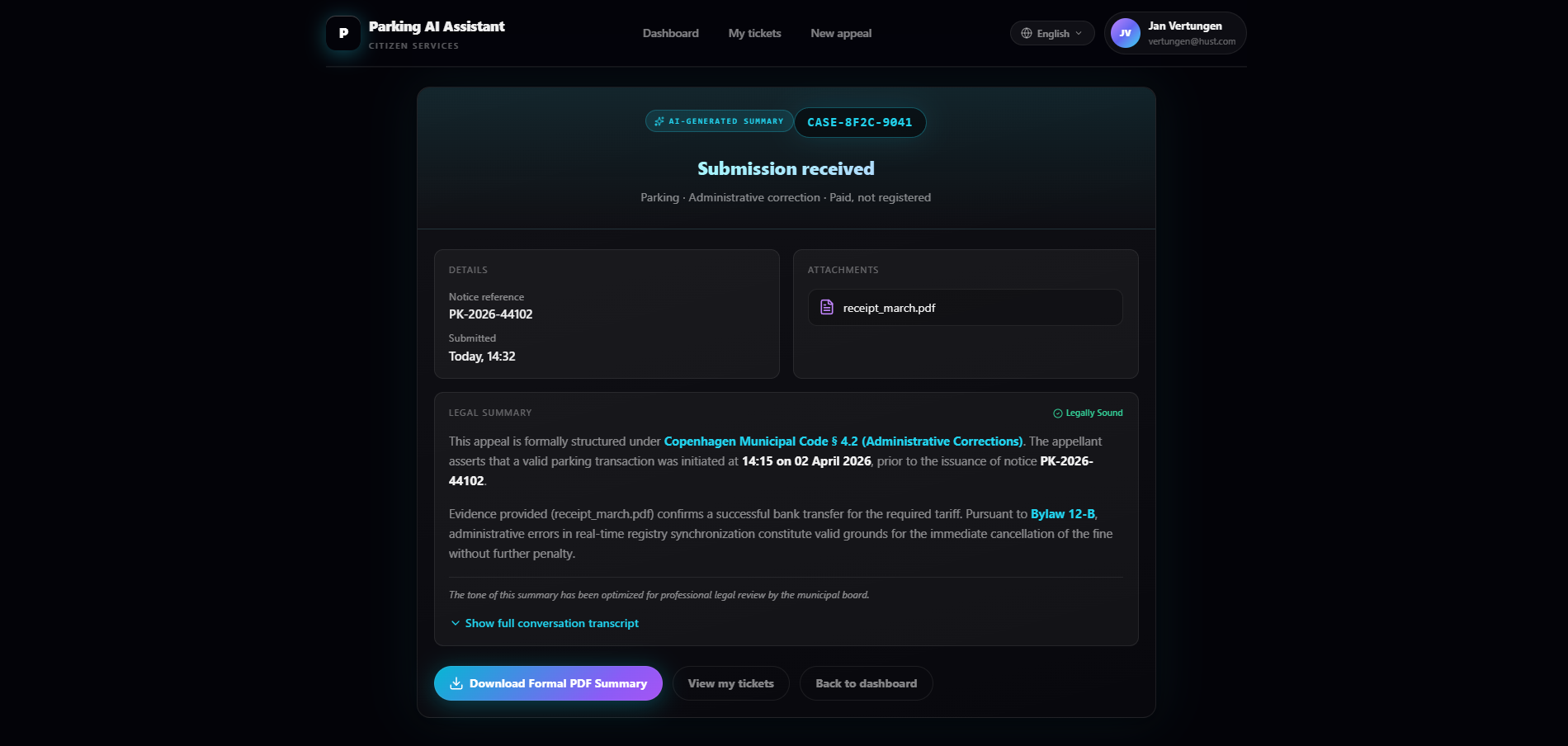
To solve the jurisdiction challenge, we built a RAG Pipeline. We indexed thousands of pages of municipal codes and parking regulations into a vector database. When a user describes their situation, the system performs a semantic search to retrieve the exact relevant bylaws, which are then injected into the AI’s “thought process” to ensure the generated appeal is legally sound.
03. KEY FEATURES
Automated Ticket Parsing: OCR and Vision-based extraction of citation details with 95%+ accuracy.
Jurisdiction-Specific RAG: Dynamic retrieval of local laws based on the detected location of the fine.
Multilingual Support: Real-time neural translation allows users to appeal in their native language while generating the final document in the official language of the authority.
Evidence Validation: Logic-based checks that ensure necessary documents (e.g., residential permits or payment receipts) are attached before submission.
Professional Appeal Synthesis: Generation of a formal PDF summary that uses professional legal tone and cites specific municipal codes.
Seamless Resume: Session persistence that allows users to start an appeal on mobile and finish on a desktop.
04. Results & Benefits
Efficiency: Reduced the average time to draft a formal appeal from 2 hours of research to 4 minutes of conversation.
Accuracy: Eliminated manual data entry errors by leveraging AI-driven document extraction.
Accessibility: Successfully empowered non-native speakers to navigate complex legal systems through the multilingual AI interface.
Cost-Effective Scaling: The RAG-based approach allowed the client to expand into three new city jurisdictions in weeks rather than months, as no new code was required—only new document embeddings.
Outcomes & Business Impact
Here’s how our solution translated into measurable success for our client.
Metric
Before AI Assistant
After AI Assistant
Drafting Time
45+ Minutes
<5 Minutes
Data Accuracy
~82% (Manual Entry)
98.5% (Vision AI)
Success Rate
~15% (Self-filed)
40-60% (AI-guided)
Staff Intervention
100% of cases
<2% of cases
05. TECHNOLOGIES


Node.js

Express.js

REST APIs

OpenAI GPT-4o
Multer
Have a project in mind?
Get in touch with us for your software development needs!